.png)




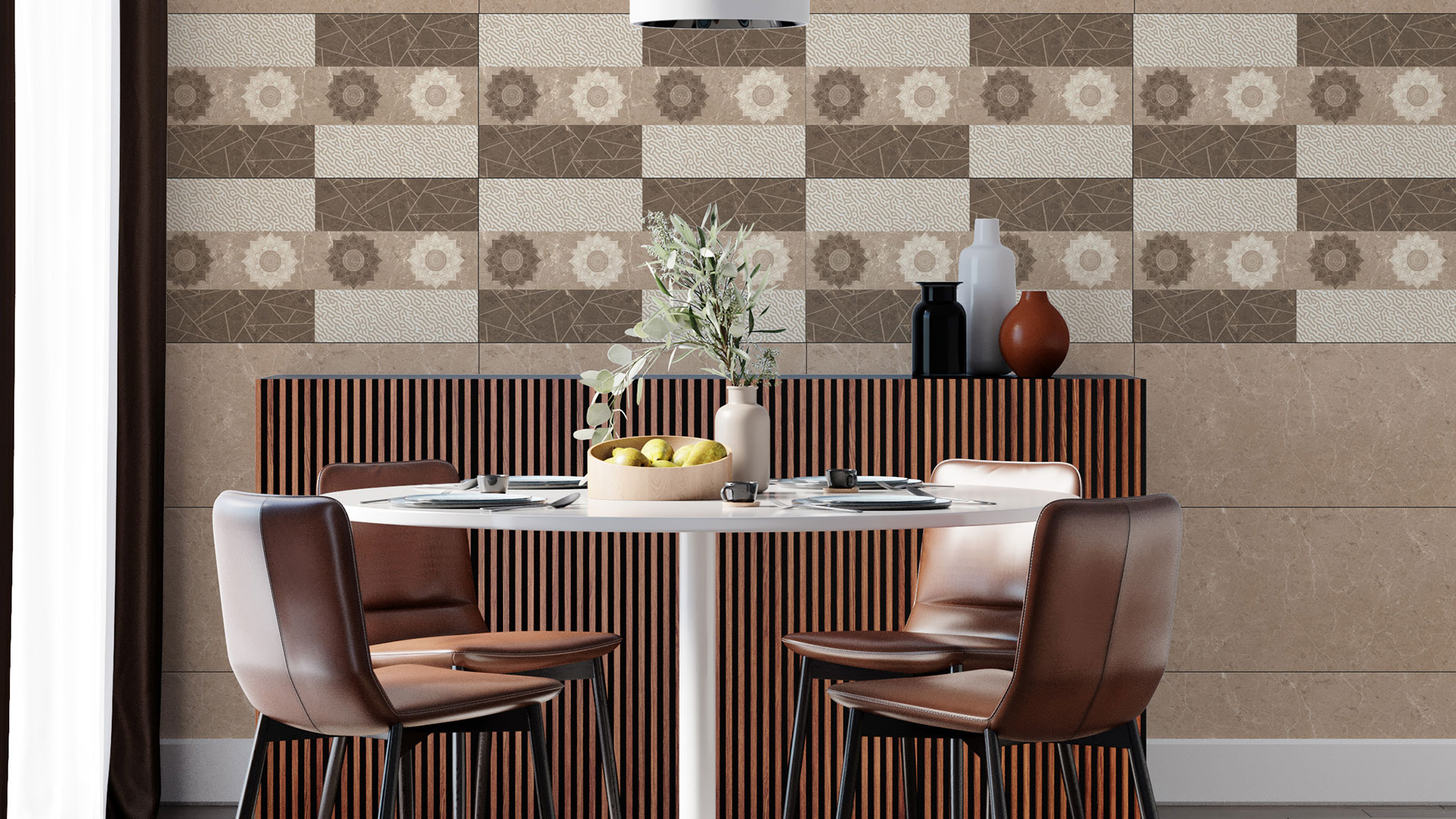
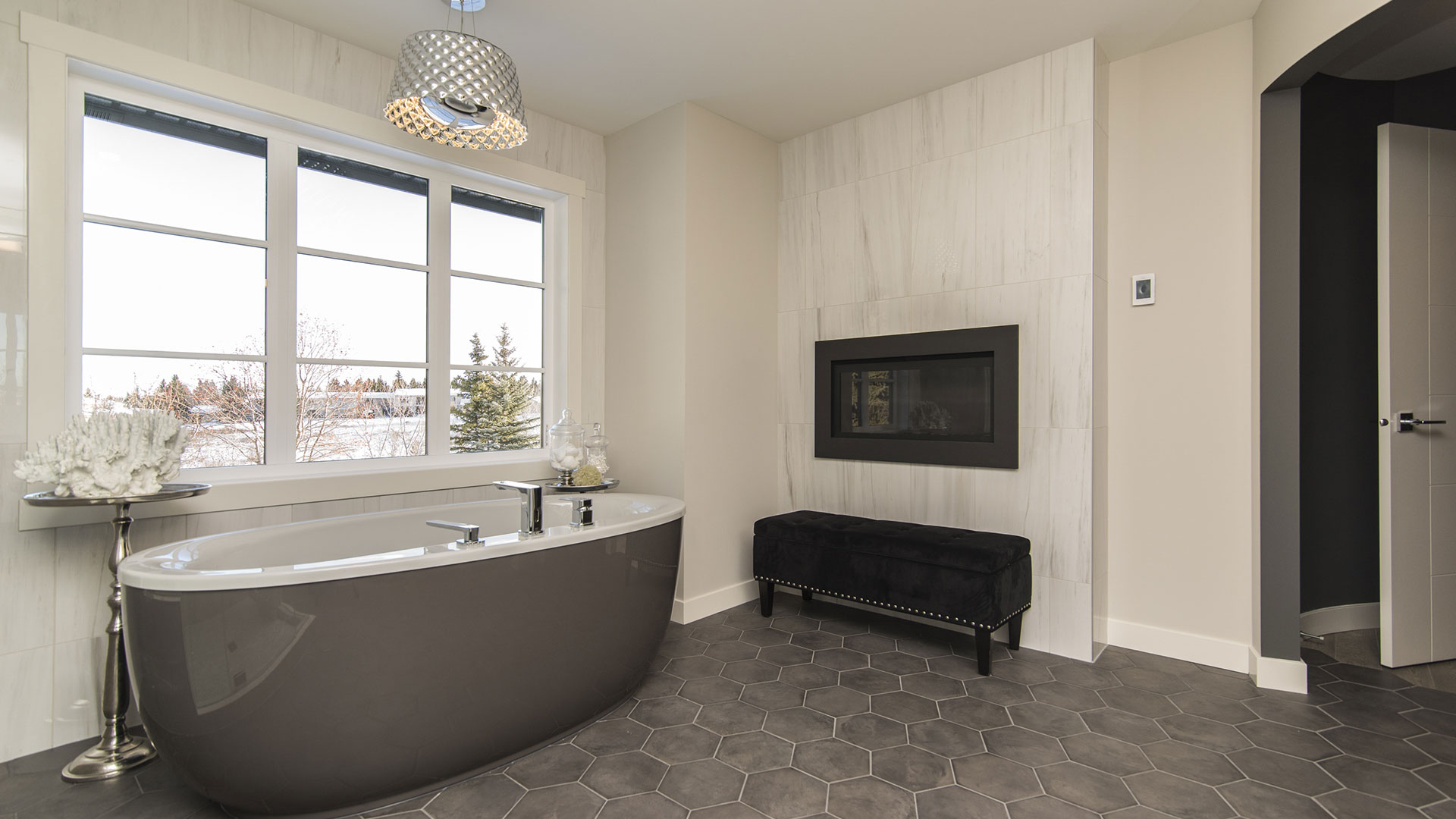
Marble Texture Tiles: A Demonstration of Elegance
Introduction: Marble is a texture that is a popular choice for many uses, such ...
/ 09 April 2026
You walk into a tiles showroom thinking it will take thirty minutes. Two hours later, you are still standing there, holding three different samples, completely unsure which one is right for your bathroom. The salesperson is listing specifications you have never heard of, your phone is full of photos you cannot compare, and every tile somehow looks perfect under the showroom lights.
This is not your fault. Nobody teaches you how to buy tiles. And in Bangladesh in 2026, the market has grown so large that even experienced homeowners feel lost. There are now more than 24 active tile manufacturing companies in the country, producing hundreds of designs across dozens of finishes, sizes, and materials.
But here is the thing. Once you understand a few core principles, the whole process becomes manageable. This guide will walk you through everything step by step, so the next time you step into a showroom in Mirpur, Bashundhara, or anywhere else in Bangladesh, you know exactly what you are looking at, what questions to ask, and what traps to avoid.
Let us be honest about something first. Most people treat tiles as a finishing detail, something to sort out once the main construction work is done. That is one of the most common and costly mistakes in home building or renovation.
Unlike your furniture or your curtains, tiles cannot be changed easily. Once they are laid, they become part of your home's structure. Removing and replacing tiles means hiring labour, dealing with noise and dust, and spending money all over again. This is why getting it right the first time matters so much.
Beyond permanence, there is the climate factor. Bangladesh has a hot, humid, and monsoon-driven climate. The tile that works perfectly in a dry country may crack, stain, or become dangerously slippery here. A tile chosen without thinking about our weather is a tile that will cause problems within a few years.
And then there is safety. Every year, people slip on bathroom floors or polished staircases because the wrong tile was installed in the wrong place. The right tile choice is not just aesthetic, it is practical and protective.
So before you think about colour or design, promise yourself you will think about function, durability, and suitability first. The rest of this guide will show you exactly how.
When you walk into a showroom, the staff will throw around terms like ceramic, porcelain, vitrified, and glazed. Here is what each of those actually means for you as a buyer.

Ceramic tiles are the most widely used tiles in Bangladesh and for very good reason. They are made from clay fired at high temperatures, are water resistant, easy to clean, and come in hundreds of designs at accessible prices. For rooms that do not deal with heavy moisture or foot traffic, ceramic is a reliable and cost-effective choice.
However, ceramic tiles are softer than porcelain. Over time, in high-traffic areas, they can scratch and wear. So do not put them where they will take a daily beating.
Best for: Bedrooms, drawing rooms, and dry living areas.

Porcelain is made with a finer, denser clay and fired at much higher temperatures than ceramic. The result is a tile that is harder, less porous, and far more resistant to water and staining. For any wet area in your home, porcelain is the smarter long-term investment.
Here is a specific number to remember: for bathrooms, kitchens, and outdoor areas, always look for tiles with a water absorption rate below 0.5%. This means moisture cannot seep into the tile body, preventing cracks, mould, and deterioration over time. Ask your supplier for this specification directly. If they cannot give it to you, be cautious.
Best for: Bathrooms, kitchens, balconies, outdoor areas, and stairs.
Vitrified tiles are produced by fusing clay with silica at extremely high temperatures. The process makes them non-porous and gives them that signature mirror-like polish. They are highly stain-resistant and require minimal maintenance, which is why modern apartments in Dhaka increasingly use them in living spaces.
The downside? Vitrified tiles can be slippery when wet, so they are not the best choice for bathrooms or outdoor areas unless they come with a textured or anti-slip treatment.
Best for: Living rooms, dining rooms, and commercial interiors.
If you are buying tiles for your walls, particularly in bathrooms and kitchens, there is one distinction your supplier may not volunteer unless you ask. Wall tiles in Bangladesh come in two body types. White body tiles are made from white clay, making them denser, more durable, and longer lasting. Red body tiles are made from cheaper red clay and are less durable over time.
In most showrooms, the price difference is noticeable but not dramatic. For areas like bathrooms that face constant moisture exposure, spending the little extra on white body tiles is a decision you will not regret five years from now.
This is the most practical section of this guide. Read it carefully before you go shopping.

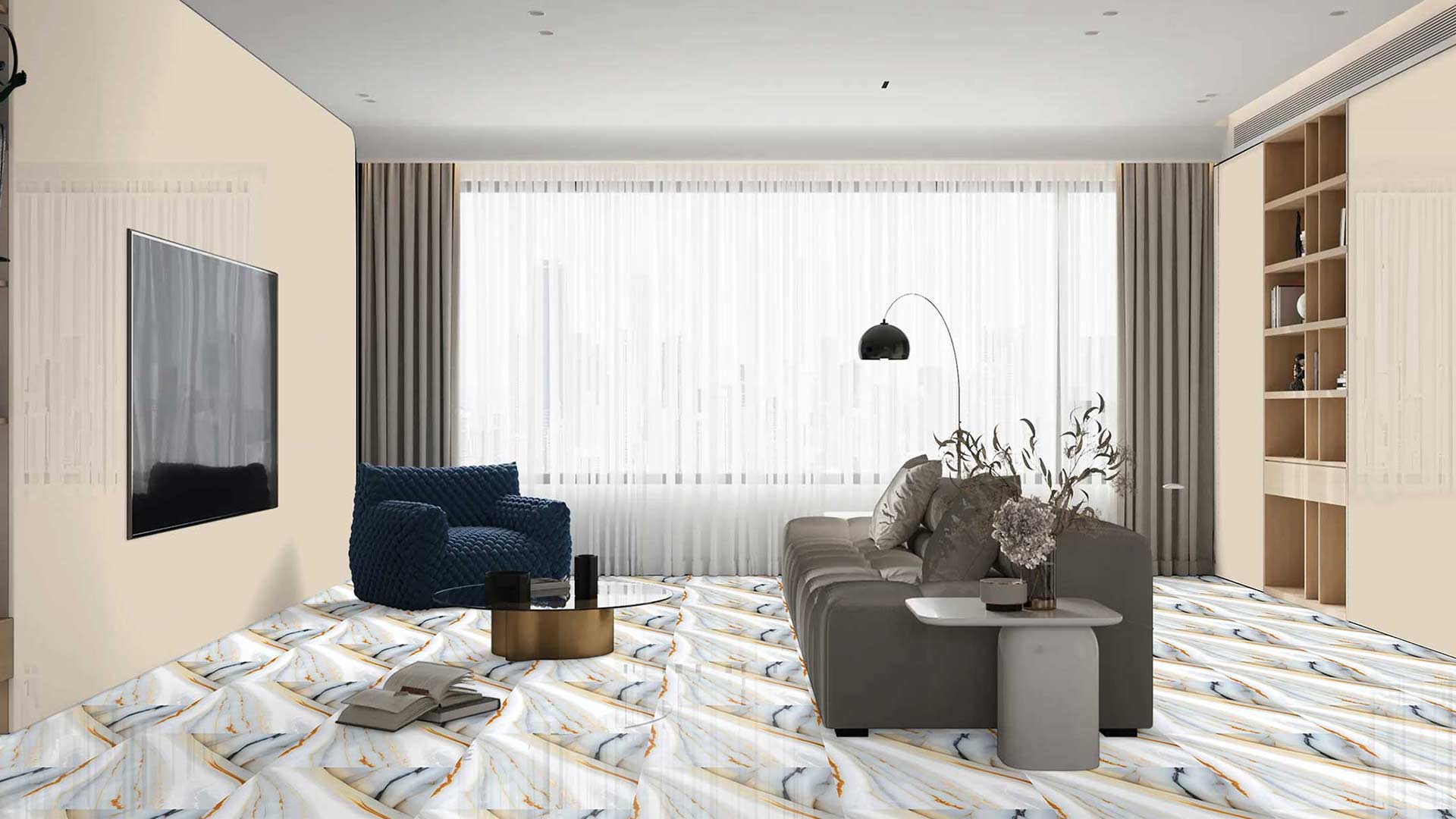
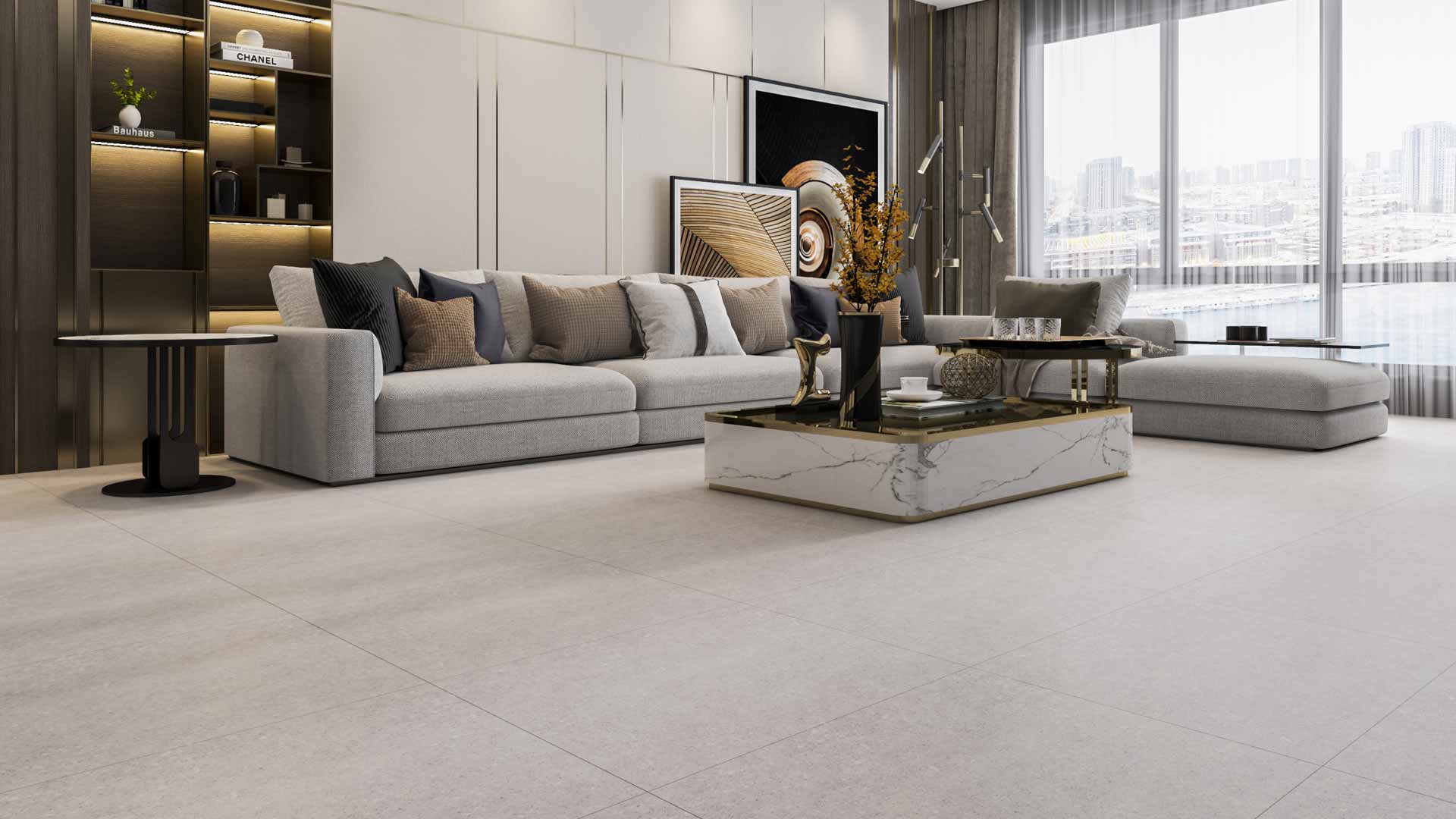
Your living room and dining room are the first things guests see. They also take daily foot traffic, furniture pressure, and occasional spills. In 2026, large-format tiles have become the standard for these spaces in Bangladeshi homes, particularly in Dhaka's apartment-heavy urban landscape.
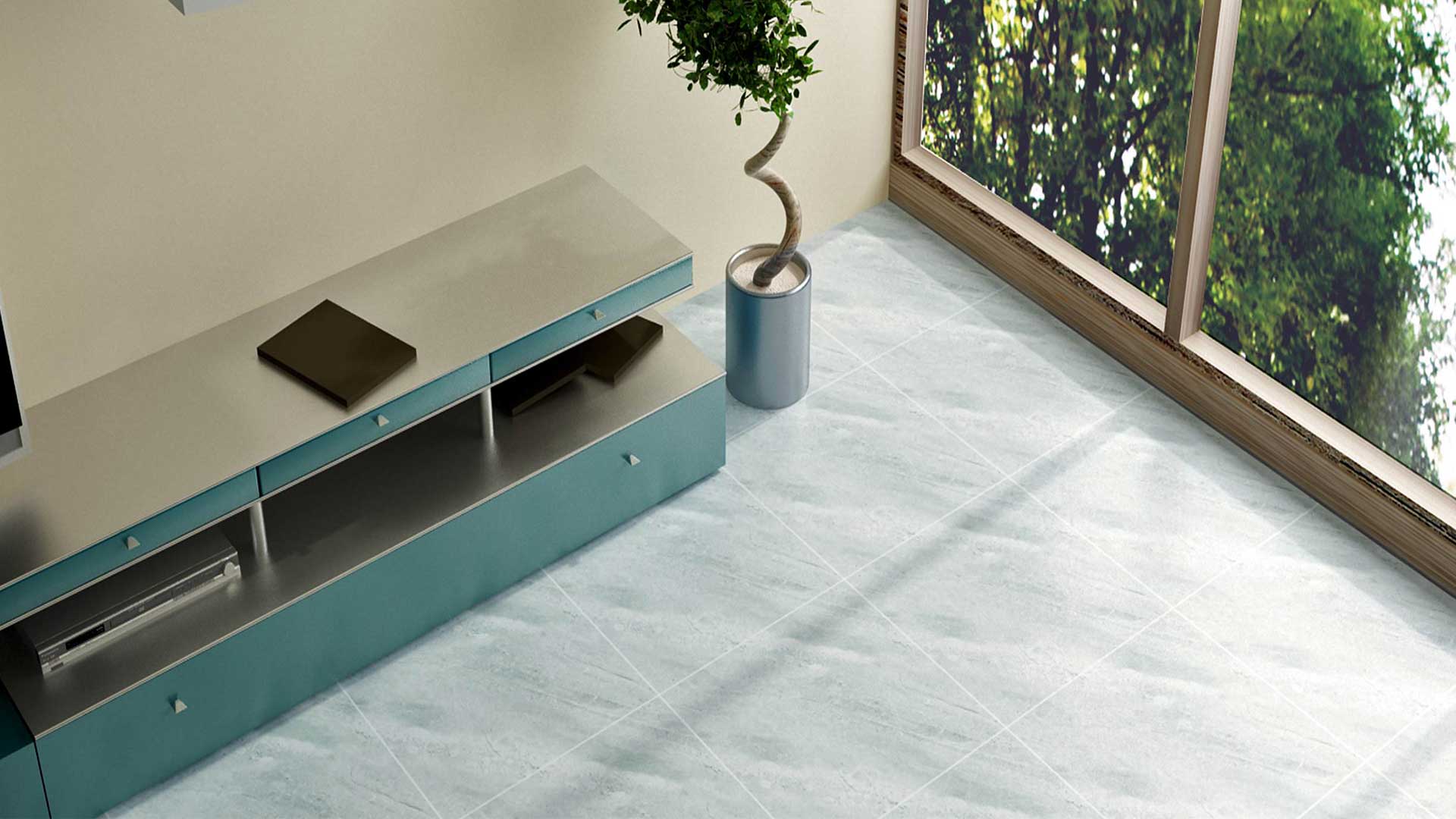
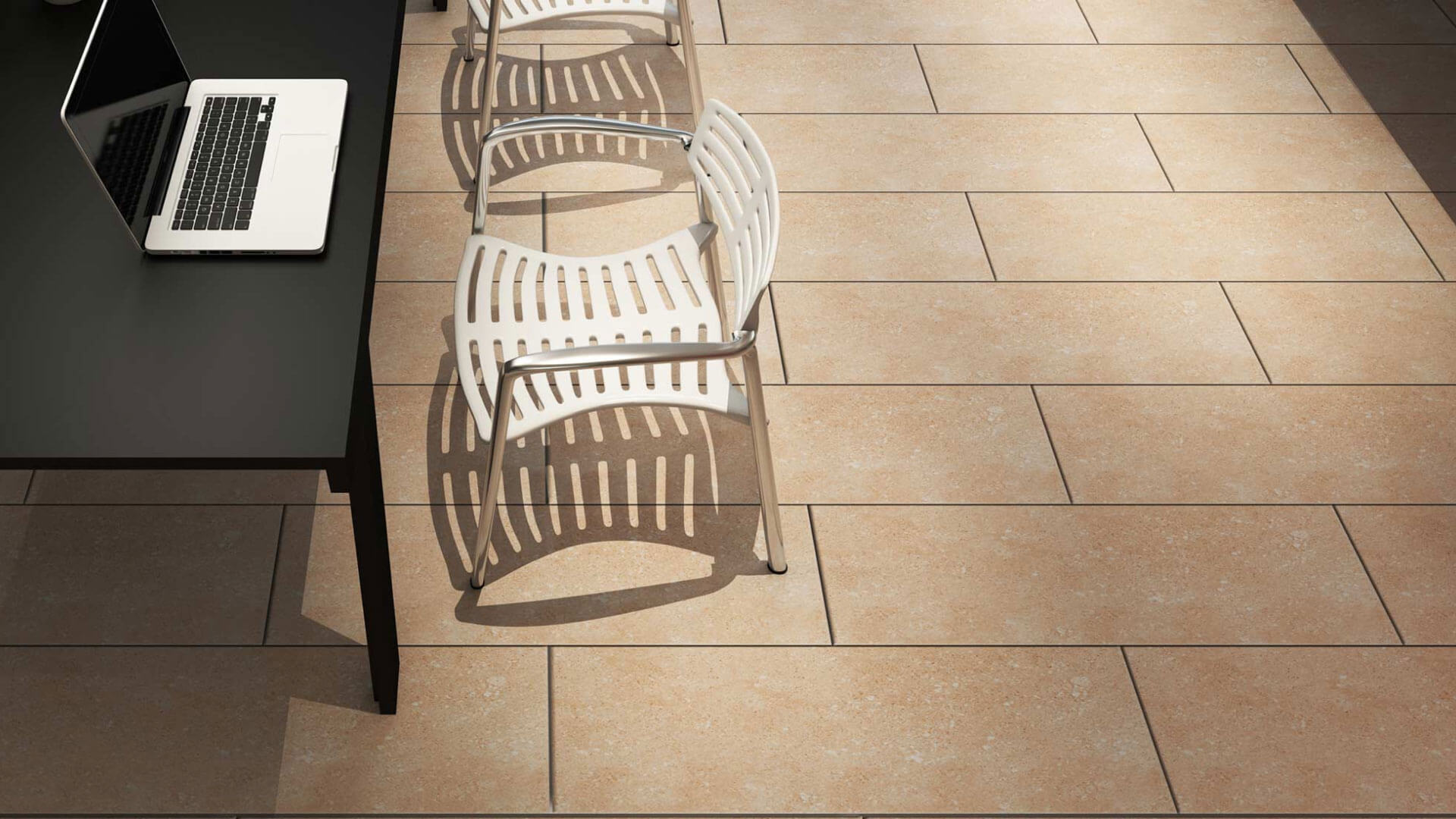
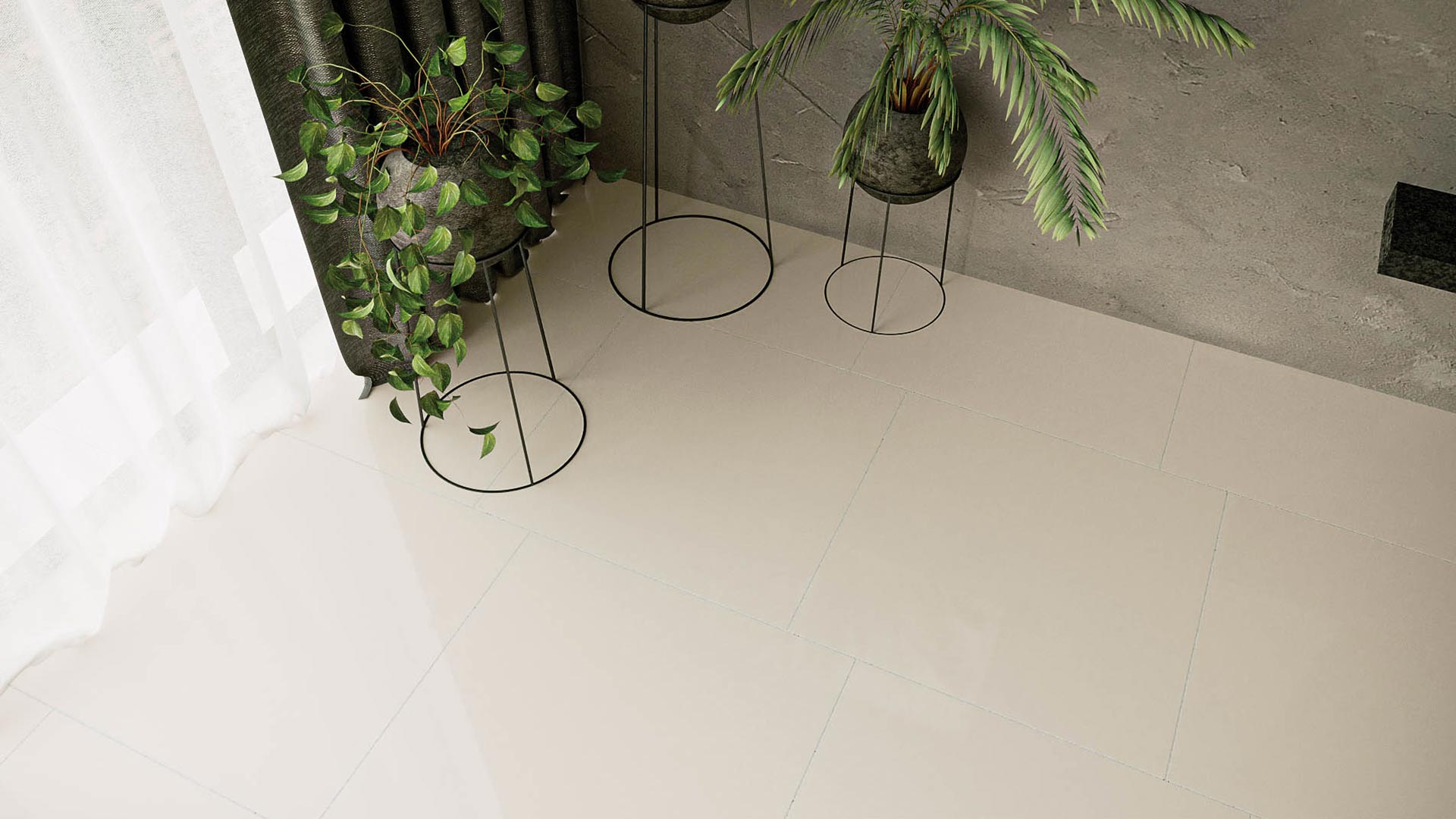
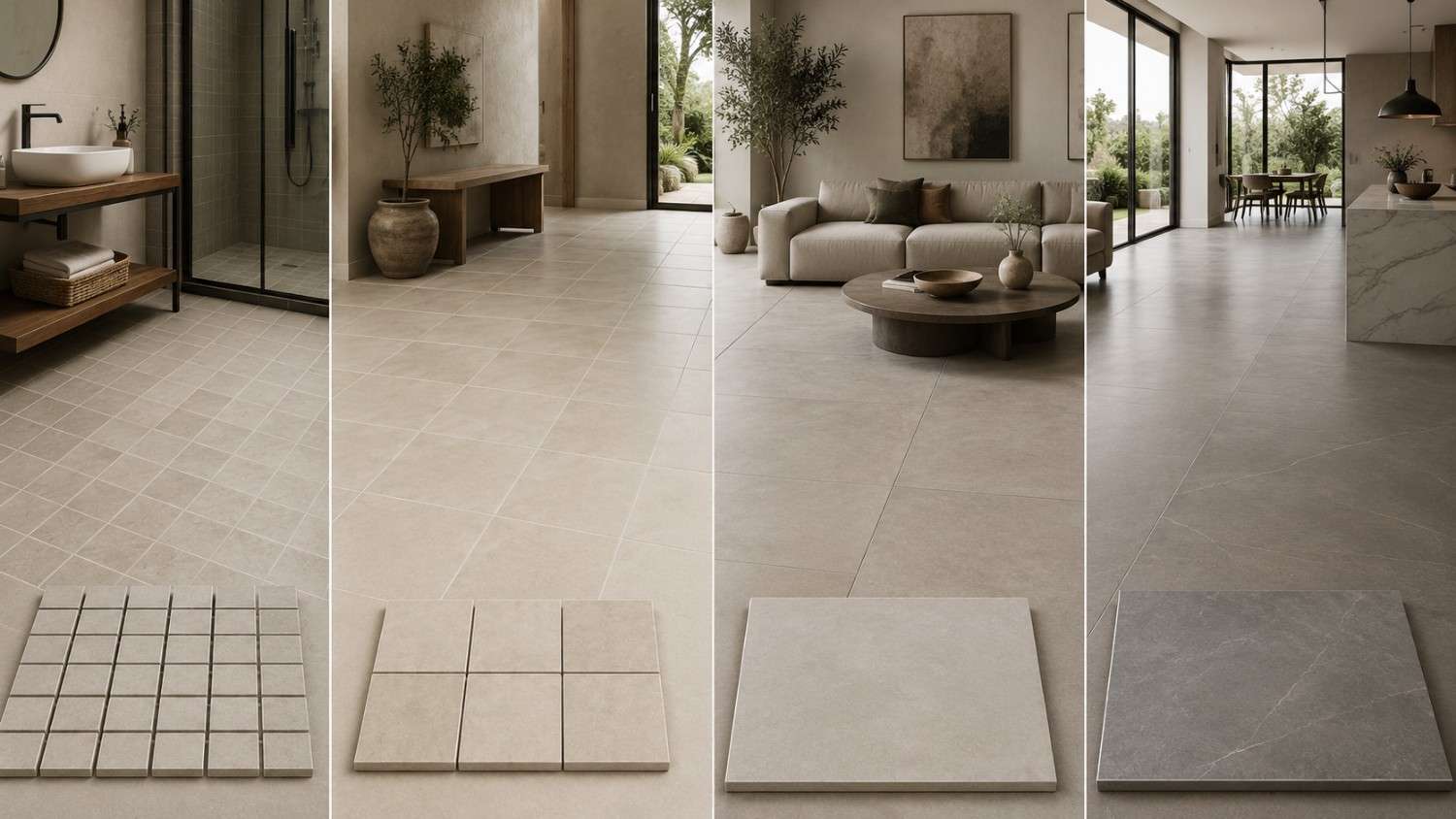
Tiles sized 60x60cm or 80x80cm create fewer grout lines, which makes the floor look cleaner and the room feel bigger. This is particularly valuable in smaller apartments where visual space is everything. Warm neutral tones like beige, off-white, and soft grey work beautifully here because they complement almost any furniture style and do not date quickly.
One practical tip: if your living room has large windows and gets strong natural light during the day, avoid very high-gloss tiles. The glare can be uncomfortable over long periods. A subtle matte or satin finish gives you elegance without the eye strain.

The bathroom is where tile selection is most critical, and also where most buyers make the worst decisions, usually by prioritising looks over safety.
Here is the rule: no high-gloss tiles on bathroom floors. Glossy tiles look stunning in catalogues but become genuinely dangerous when wet. Bangladesh's bathrooms are wet almost constantly, and a slippery floor is an accident waiting to happen.
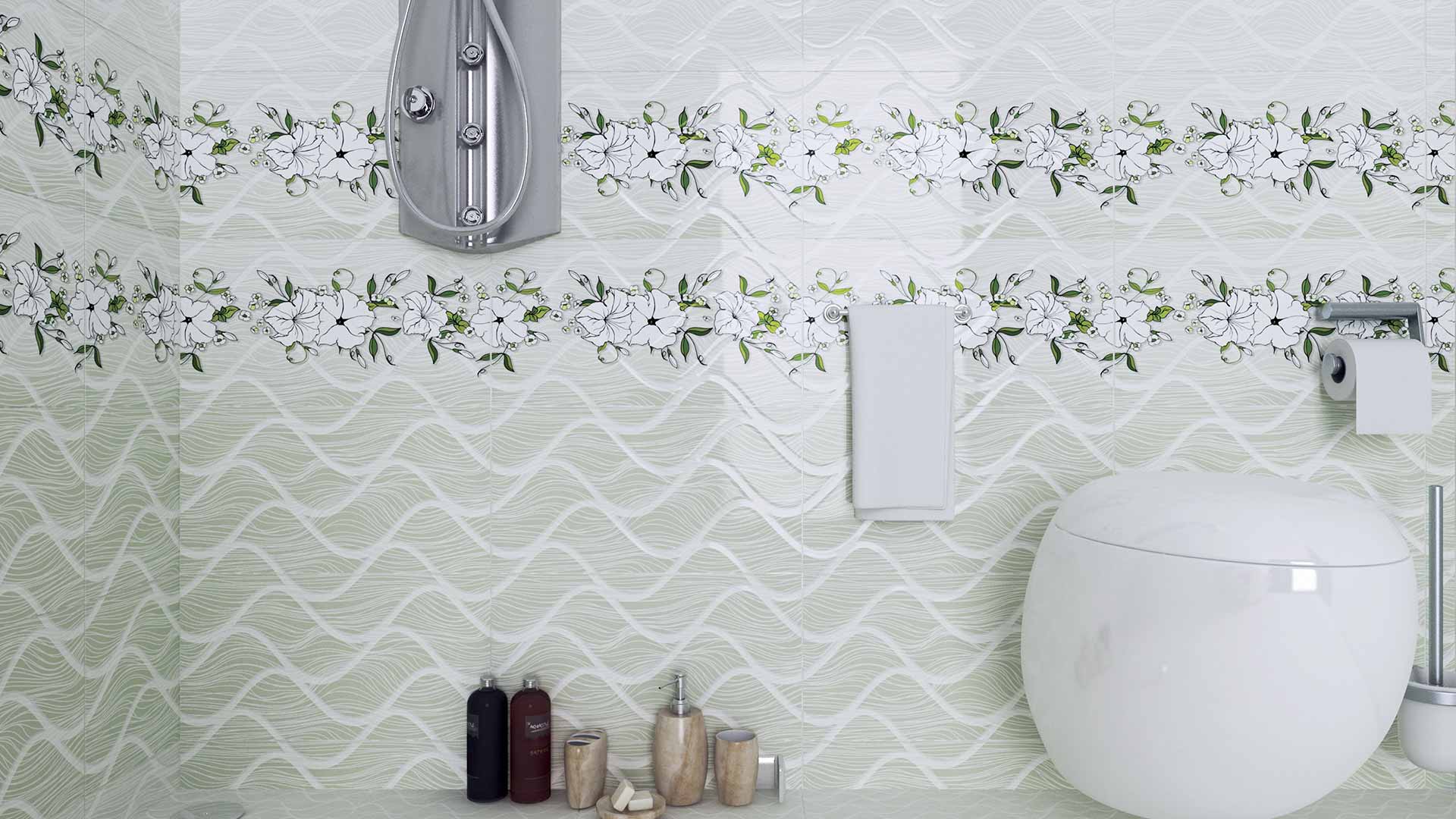
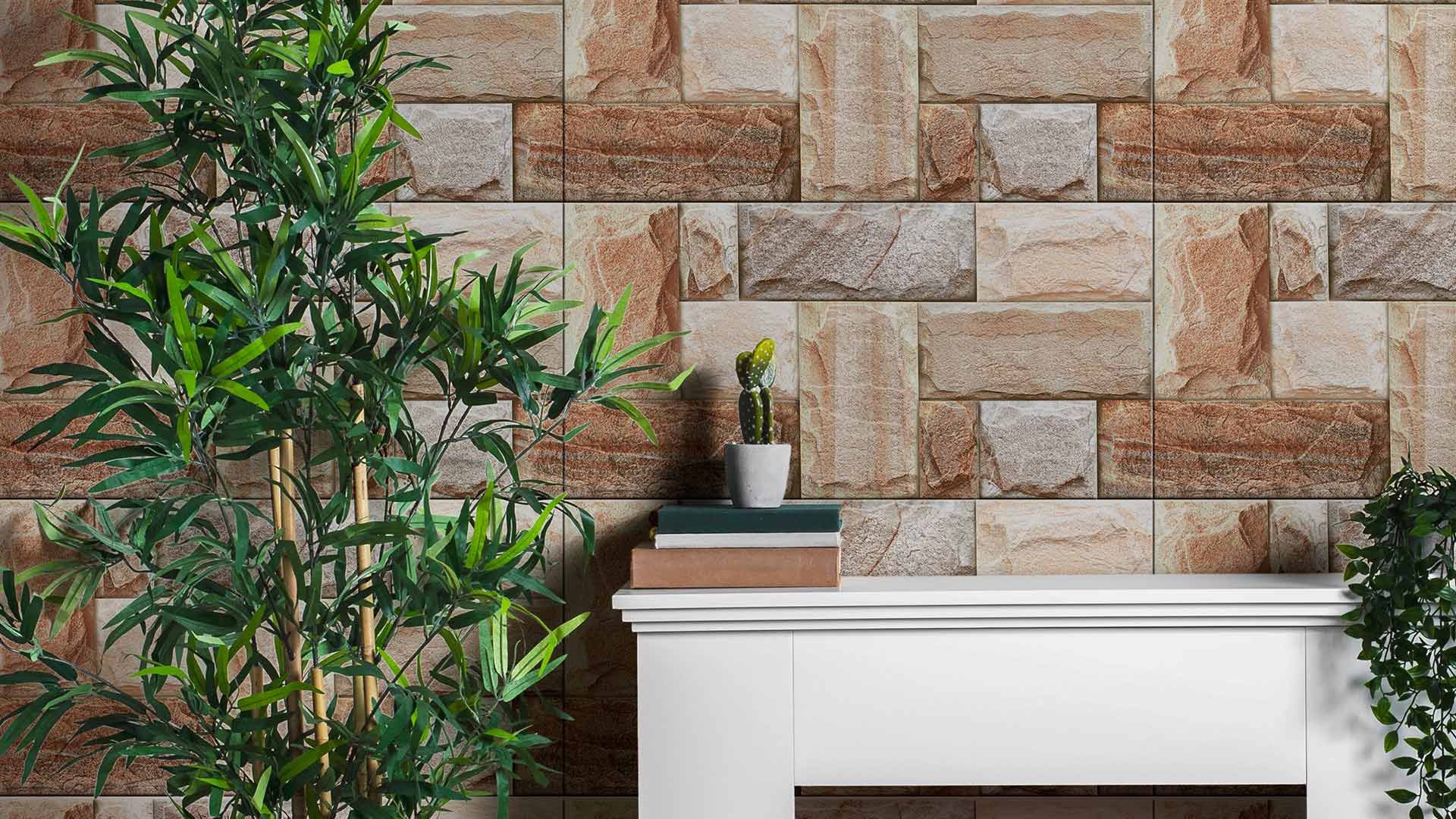
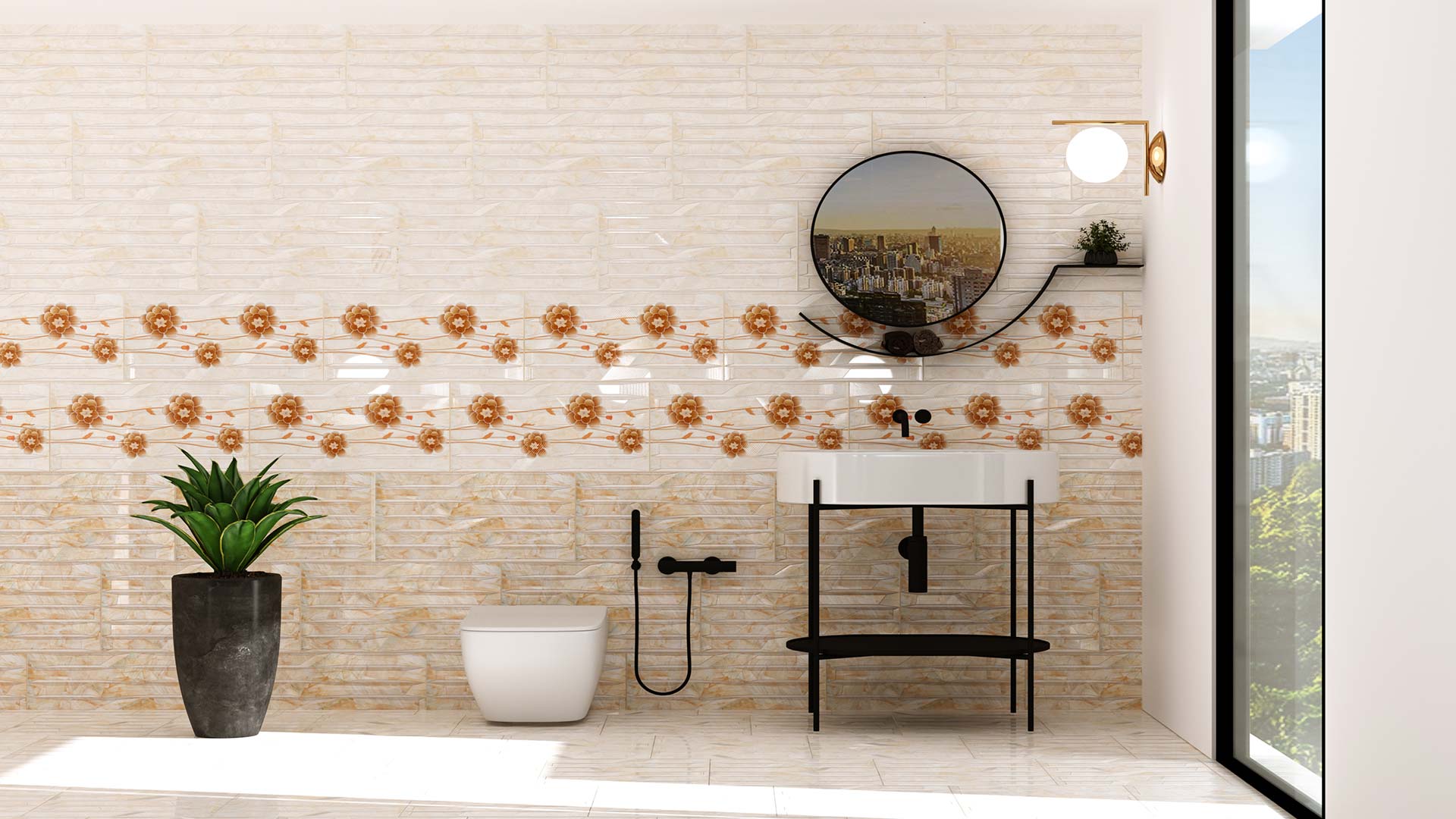
For bathroom floors, always choose tiles with a visible texture or a dedicated anti-slip finish. For bathroom walls, you have more freedom with gloss since walls do not create slip risks. Light-coloured wall tiles also make your bathroom feel brighter and more spacious, which matters a great deal in smaller Bangladeshi bathrooms.
Also check the tile size. Very large tiles in a small bathroom can feel visually overwhelming. A 30x60cm or 30x30cm tile usually works well for bathroom walls, while 30x30cm or 40x40cm anti-slip porcelain is a solid choice for the floor.

Your kitchen is a battlefield. Turmeric, oil splashes, steam, and daily cleaning routines are relentless. Your tiles need to handle all of it without showing wear or becoming difficult to clean.
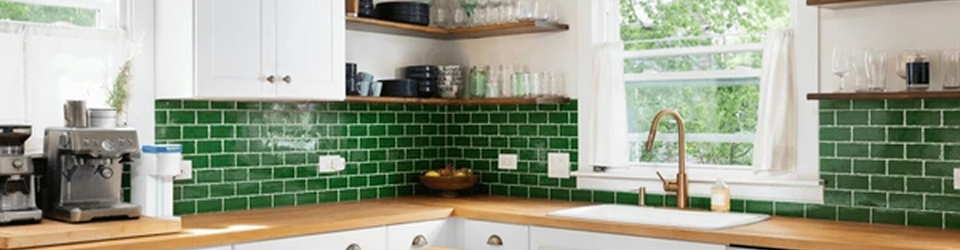
For kitchen floors , go with porcelain. It handles spills, is resistant to staining, and does not absorb odours over time. For kitchen walls and backsplashes, smooth ceramic tiles are a practical choice because they wipe clean easily.
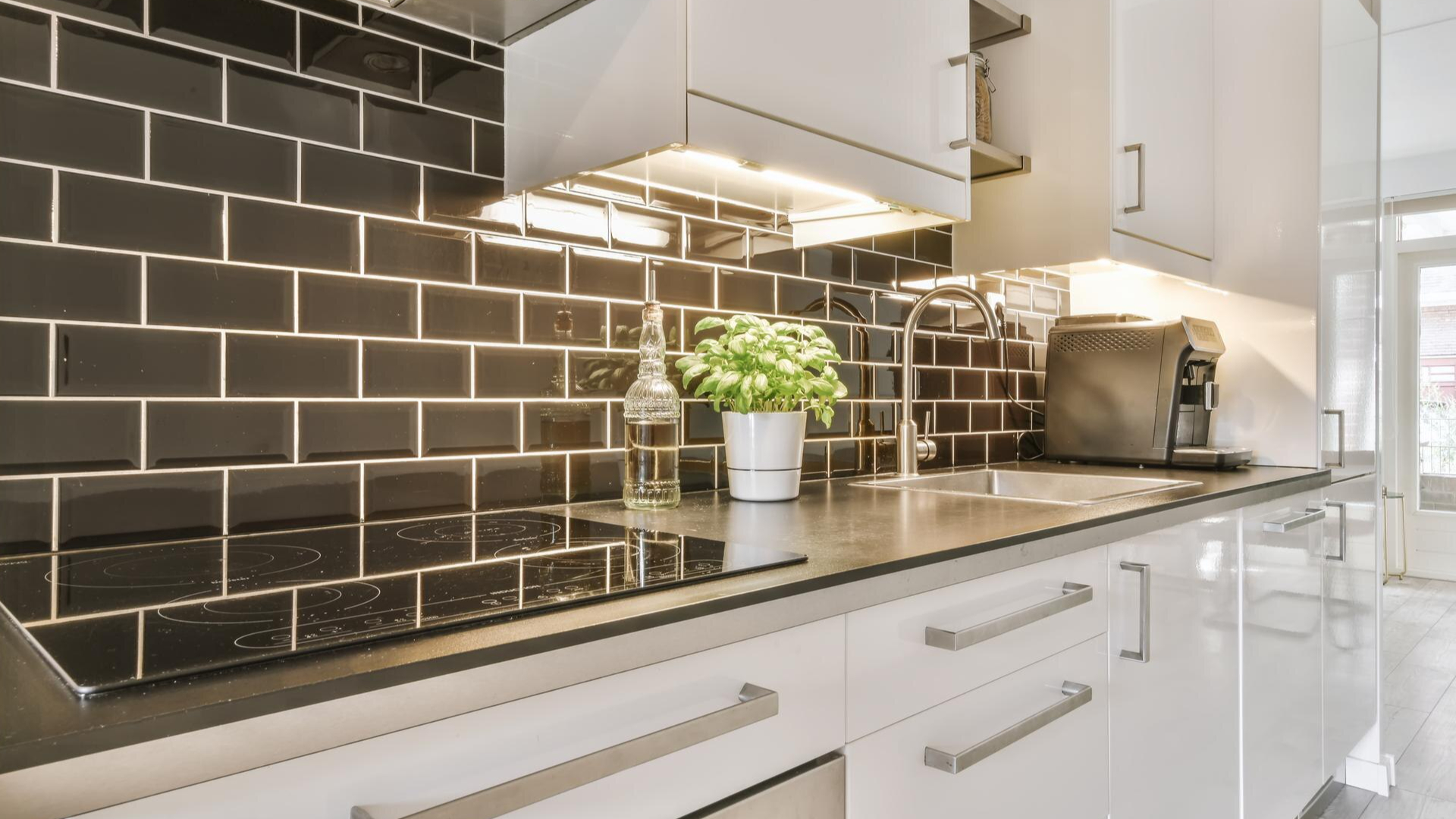
Avoid very dark tiles in the kitchen. They show every water spot and cooking residue more clearly, which means you will be cleaning constantly. Light to mid-tone shades are far more forgiving in a busy kitchen environment.
These areas need one thing above everything else: grip.
Wet outdoor tiles and staircases are among the leading causes of home accidents in Bangladesh, especially during monsoon. Always choose tiles specifically rated for outdoor or high-moisture use, with a textured or rustic finish that provides traction even when the surface is wet. Many reputable brands now offer tiles with dedicated anti-slip coatings for exactly these spaces.
Also consider durability. Outdoor tiles face direct sun, rain, and temperature fluctuation. Vitrified or high-density porcelain tiles are far better equipped to handle this long-term than standard ceramic options.
Knowing the type of tile you want is only half the job. Knowing how to assess quality before you buy is equally important. Here are the specific things to check.
Ask for the water absorption rate: For wet areas, anything below 0.5% is what you should be targeting. This single number tells you more about a tile's suitability for your bathroom or kitchen than any design feature can.
Check the tile surface under different light: Showrooms use warm, carefully positioned lighting that makes every tile look its best. Take a sample home. Check it in natural daylight during the morning and under your room's actual lighting in the evening. The difference can be surprising.
Look at the tile edges: Run your finger along the edge. Rectified tiles have precisely cut, uniform edges that allow for very thin grout lines and a sleek modern finish. Non-rectified tiles have slightly uneven pressed edges and require wider grout lines. This affects how your floor looks overall, especially with large-format tiles.
Check the tile for warping: Place the tile flat on a surface and press the corners. A warped tile will rock slightly. Warped tiles cause uneven floors and installation problems later.
Always order 10% extra: This is not optional, it is standard practice. Cutting waste, breakages during installation, and potential future repairs all eat into your supply. Running short after installation means trying to source matching tiles from the same production batch, which is often impossible once that batch is sold out.
Let us end with the part that saves you money and frustration.
Choosing tiles for looks and ignoring function: A tile that looks gorgeous in the living room may be dangerously slippery in the bathroom. Always match the tile to the room's actual demands before thinking about aesthetics.
Ignoring grout colour: Most buyers pick their tiles carefully and then grab any available grout without thinking. The grout colour has a major impact on the finished look. A matching or complementary grout creates a seamless, clean appearance. A contrasting grout draws the eye to every single joint line in the floor. Think about this before finalising your purchase.
Skipping the sample test at home: Never finalise a tile purely based on what you see in the showroom. Bring the sample home, place it in the actual room, and look at it at different times of day. This one step prevents a very large regret.
Using glossy tiles outdoors or in wet areas: A polished tile in a wet outdoor space or on a staircase is a safety hazard. The finish must match the environment, not the other way around.
Buying the minimum quantity: Always order at least 10% more than your calculated requirement. Tiles are produced in batches, and if you run short later, matching the same shade from a different batch is extremely difficult.
Here is a simple checklist to take with you:
Measure each room and calculate the total area in square feet
Add 10% to your total for wastage and breakage
Decide the function of each room before deciding the finish
Ask your supplier for the water absorption rate on any tile going in a wet area
Take samples home before placing a bulk order
Confirm grout colour alongside tile selection
For bathrooms, stairs, and outdoor spaces, verify anti-slip properties explicitly
Buying tiles in Bangladesh in 2026 has never offered more choice or more quality. The local industry is producing genuinely world-class products. But the abundance of options also means the decisions are more complex than they used to be.
Take your time. Go in informed. Ask the right questions. And remember, a tile that suits your room, your climate, and your daily life is always a better tile than one that simply looks good in a showroom.
Introduction: Marble is a texture that is a popular choice for many uses, such ...
Whether you agree with it or not, a house's bathroom is an essential space for p...
Do you ever feel like your tiny bathroom is enclosing you? Does it still seem cl...
Floor tiles is the most important element in making a home look modern nowadays....
The world is going ahead in every sector, including technology, agriculture, edu...
Have you ever entered a room that instantly amazes you? Alongside the decoration...
Tiles are not just for decoration. Good tiles with good and classy designs add b...
A small living room is intimate, cosy, and quite challenging to decorate! A smal...
What immediately comes to your mind when you think of remodelling your home? W...
When walking across a tile floor, you may notice scratching, cracking, or bounci...
People often stress about kitchen backsplashes, living room tiles and even porch...
Good walls make good impressions. The first thing people notice about your prope...
When discussing the floor, most people still continue to use the same concept of...
When designing or renovating a home, the bathroom often becomes an afterthought,...
The phrase "homogeneous tiles" can be used to select tiles for your house or pla...
Carpet tiles, also known as carpet squares, are small, east-cut carpet pieces th...
Standing on your shining floor in a lazy afternoon, one curiosity might have str...
Imagine stepping into your kitchen after a long day in the bustling streets of D...
A good flooring defines the character of a home. When your guests step on the fl...
Let's be honest: your kitchen tiles have seen better days. Between the tomato sa...
Have you ever walked into your kitchen, looked around, and felt like something j...
Have you ever walked into someone's living room and immediately felt l...
The kitchen is often considered the heart of the home. It is a place where meals...
The use of wall tiles in modern home decor is a necessity, as this product combi...
Imagine two buildings side by side somewhere in Dhaka. The first monsoon rain of...
You are standing in a tile showroom somewhere in Tejgaon or Mirpur. You have fou...
Your living room is the first thing guests see and the last space you relax in a...
Choosing the right floor tiles size can completely transform how a room look...
In Bangladesh, our kitchens work extra hard. Between high humidity, daily heat, ...
Have you ever walked into a bedroom and felt instantly calm? Not because of the ...
Suppose you walk into an office in Gulshan or Banani. Before you even see the re...
If you have ever slipped on a wet bathroom floor or watched a family member lose...
Standing in a tile showroom, staring at two nearly identical glossy floor tiles,...
Walk into any tile showroom in Dhaka and you will notice a familiar pattern. Buy...
If you are planning a construction or renovation project and searching for a dur...
When you walk into a tile showroom in Dhaka , you will almost certainly see t...
Walk into almost any busy shop, office lobby or family home in Dhaka and look cl...
In most Dhaka apartments, the balcony works harder than any other part of the ho...